


Why is El Niño trending today?
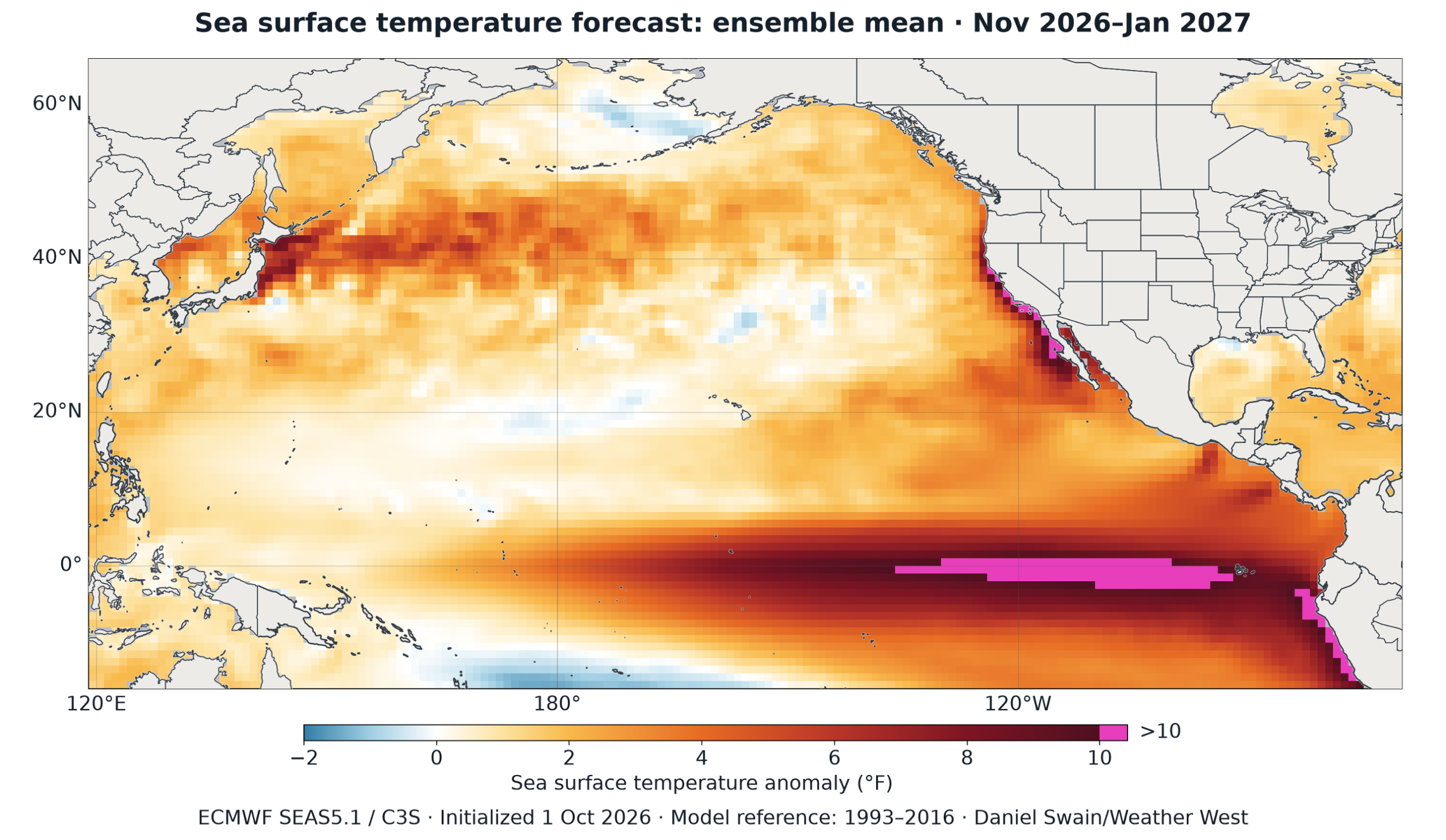
El Niño intensified rapidly after forming in summer and is now the strongest on record by most metrics, with models predicting it will stay strong into next spring. This unusual strength is expected to shift U.S. weather, bringing warmer, drier winters in the north and wetter conditions in the south.
What happened
- Earlier
An El Niño event formed in the tropical Pacific this summer and has steadily strengthened, becoming the strongest on record by mid‑October [1]
- Oct 13, 2026
The Climate Prediction Center gave the El Niño a >80% chance of remaining strong‑to‑very strong through the Northern Hemisphere winter and into spring [3]
What you need to know
Expect warmer, drier winters in the northern U.S., especially the Midwest.
Southern states may see cooler, wetter conditions during winter.
Coastal California is already experiencing record humidity, heat, and coastal erosion linked to the event.
Economic impacts can vary widely by country, affecting food, power and fiscal pressures.
The exact regional severity of winter weather shifts and the ultimate economic fallout for U.S. states remain uncertain.
Background
El Niño is the warm phase of a Pacific Ocean climate cycle that alters global weather patterns. This year’s event has broken historical temperature records in the eastern Pacific, driven by strong westerly wind bursts that reinforce ocean warming [1].
Predictive models identified the extreme event months ahead, a rare success given the usual spring predictability barrier. Observations so far match those forecasts, suggesting continued strengthening [1].
Financial analysts note that while El Niño can cause droughts, floods, and power disruptions, the economic impact depends on each country's resilience and policy response, as seen in past events in Indonesia, the Philippines, and Peru [2].
Questions people ask
Will the El Niño cause more storms on the U.S. West Coast?
So far, California has seen higher coastal water temperatures, humidity and some storm‑related flooding, and the pattern could bring additional moisture to the West Coast this winter.
How will El Niño affect the Midwest’s growing season?
Historical patterns suggest drier springs during El Niño years, which could delay planting and reduce early‑season rainfall in the Midwest.
Is the El Niño expected to last beyond winter?
Forecasts give an over 80% chance that the strong‑to‑very strong El Niño will persist into the next spring [3].
Where this came from
[1] weatherwest.com
El Niño, already near/at record intensity, will further strengthen to historic level and likely bring major California & SW U.S. winter impacts
Preview image from weatherwest.com
 [2] troweprice.com
El Niño returns: From climate signal to sovereign risk
Preview image from troweprice.com
[2] troweprice.com
El Niño returns: From climate signal to sovereign risk
Preview image from troweprice.com
 [3] nbcchicago.com
Strengthening El Niño could continue into spring, new forecast says
Preview image from nbcchicago.com
[3] nbcchicago.com
Strengthening El Niño could continue into spring, new forecast says
Preview image from nbcchicago.com
Found through Google Trends and drafted with AI from at least two cited sources. Published automatically after passing our automated checks for sources, wording and safety. It may not have been reviewed by a person yet. Report a correction.