


Why is the green star discovery trending in the UK?
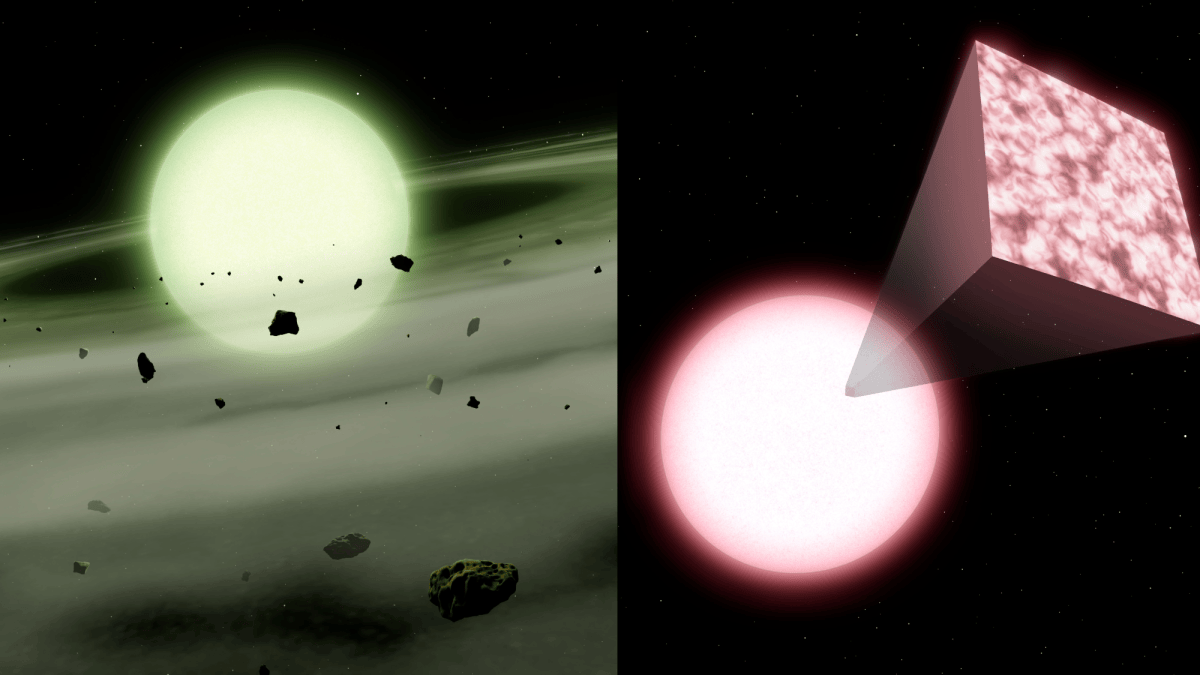
A team led by University of Warwick researchers used spectral data to model the colour of white dwarf stars and found one, WD J1330+6435, that would look chartreuse green. The finding shows dense white dwarfs can display unexpected colours beyond the usual orange‑white‑blue range.
What happened
- Earlier
Researchers analysed spectra of many white dwarfs and modelled human‑vision colours, identifying a chartreuse‑green dwarf and the reddest dwarf ever recorded [1][2]
What you need to know
White dwarfs are dense stellar remnants whose colour is usually linked to temperature.
Extreme atmospheric density (≈1 g cm⁻³) lets trace elements absorb a broader range of light, altering perceived colour.
The colour was inferred from spectral data, not seen directly, because no white dwarf is close enough for naked‑eye observation.
Different atmospheric compositions produce distinct colour groups: carbon‑rich (pink/purple), debris‑rich (yellow), hydrogen‑helium mix (cyan/blue).
It remains unconfirmed whether any future observations could directly capture the green hue, as all current conclusions rely on modelled spectra.
Background
White dwarfs are the compact cores left after Sun‑like stars exhaust their fuel. Their colour traditionally indicates temperature, with cooler stars appearing orange and hotter ones blue‑white.
The Warwick study, published in RAS Techniques and Instruments, showed that in the ultra‑dense atmospheres of the coolest white dwarfs, trace elements like carbon, calcium, and sodium interact with dense helium plasma, broadening light absorption and shifting colour away from the temperature‑driven norm.
By converting each star’s spectrum into a human‑vision colour model, the team found that some white dwarfs would appear green, pink, purple, cyan, or yellow if viewed up close, with WD J1330+6435 standing out as the first credible green star.
Questions people ask
How can a star appear green if stars are usually orange, white, or blue?
In extremely dense white dwarf atmospheres, trace elements absorb light across a wide spectrum, producing colours not dictated solely by temperature.
Can we see the green colour with telescopes?
No; the colour is derived from spectral analysis and modelling, as no white dwarf is close enough for its hue to be observed directly.
What makes WD J1330+6435 green?
Its atmosphere contains calcium, lithium and sodium from accreted planetary debris, which, under dense helium conditions, shift its emitted light to a chartreuse hue.
Where this came from

Found through Google Trends and drafted with AI from at least two cited sources. Published automatically after passing our automated checks for sources, wording and safety. It may not have been reviewed by a person yet. Report a correction.